School of Pharmaceutical Sciences, Wuhan University
Research Project
185
1,109
57
84.38%
Integrated Wet–Dry Analysis of SARS-CoV-2 Spike RBD Expression and Host Interaction Targets
From transient mammalian-cell expression optimization to machine-learning-guided production prediction and topology-to-structure host-target screening.
This project brings together an experimental foundation for SARS-CoV-2 Spike receptor-binding domain (RBD) production with two computational extensions. The wet-lab branch establishes how transfection strategy and construct design shape recombinant RBD output, while the dry-lab branches turn sequence features and interaction data into actionable guidance for expression control and host-target prioritization. Across the full page, the project should read as one integrated research pipeline rather than three disconnected mini-studies.
This page presents an integrated SARS-CoV-2 RBD workflow that combines experimental expression logic with current computational modeling and interactome analysis.
RBD mutant records
interaction records
core host proteins
predicted high-expression probability for B678
Research narrative viewer
01 / Experimental Foundation
From Transfection Feasibility to Detectable RBD Expression
This section shows how the project first made transient expression experimentally controllable, moving from transfection feasibility to blot-based validation of recombinant SARS-CoV-2 RBD production.
PPT 01
1 of 2 in Experimental Foundation
Comparing Delivery Modes in Mammalian Cells
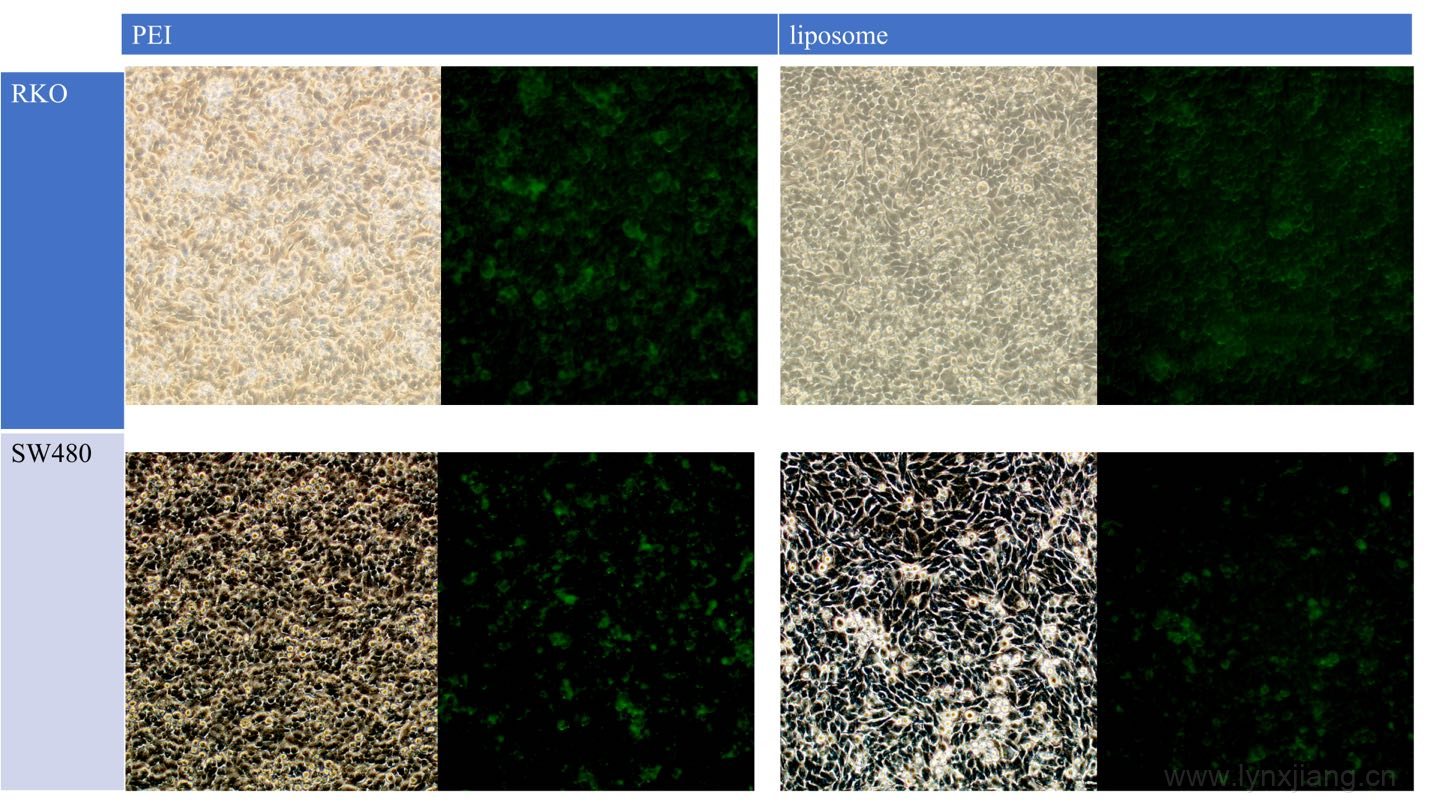
Before the final RBD production workflow was locked in, the project first treated transfection as a platform problem. The image compares PEI and liposome-based delivery across two adherent mammalian cell lines, pairing bright-field and fluorescence views to make transfection behavior visually readable. On the webpage, this figure should be positioned as a methodological prelude: it shows the logic of delivery comparison and signal readout rather than the final production system itself.
The point of this image is not to claim that these exact cell lines became the final manufacturing platform, but to establish a key experimental lesson: protein-expression work only becomes reliable after delivery efficiency is made visible and controllable. This figure therefore opens the narrative by framing transfection as the first bottleneck in the larger RBD workflow.
- Side-by-side PEI vs liposome comparison.
- Bright-field and fluorescence readouts shown together.
- Used here as a feasibility / method-selection visual.
- Establishes delivery efficiency as the first controllable variable.
A methodological opening image: before optimizing protein yield, the workflow first makes transfection performance observable.